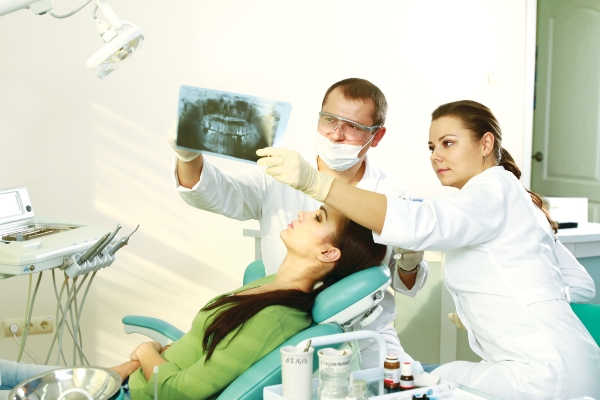
When patients go for routine dental care, they may or may not have X-rays taken of their mouths. Dentists use these important diagnostic tools to check all layers of the tooth. While a key part of routine care, X-ray imaging may not be taken every visit. Every patient is different, and the recommended frequency for X-rays varies for each person.
Why X-rays are a necessary part of dental care
There is only so much that a dentist can see with the naked eye during a routine dental care appointment. X-rays can help a dentist identify areas of the enamel that are weakened or decayed. In this way, problems can be addressed when they are small and more manageable. If the teeth and supporting structures are not monitored regularly with X-rays, there are a number of conditions that can be overlooked. Consider these dental issues that X-rays help identify:
Cavities between the teeth
When looking at a tooth intraorally, the enamel may appear structurally sound when there is actually a large problem between the teeth. Many cavities begin in the space between two teeth and are commonly referred to as "flossing cavities." If dentists are not able to view this area through an X-ray image, decay can quickly progress into other areas of the teeth. This can lead to a toothache or even the need for root canal treatment. Catching these problems in the earliest stages is essential in allowing for the least invasive treatment possible.
Lesions in the jawbone
Oral cancer is a problem that is on the rise, and patients should be receiving routine screenings. These screenings should take place at every preventive care appointment, and X-rays are an important part of this. Panoramic imaging shows the upper and lower jaws so dentists can search for any abnormalities. Cancerous lesions are easier to treat in the early stages. Even if the lesions are determined to be benign, these should be monitored at each routine dental care appointment.
Cavities and decay under crowns and bridges
Many patients are unaware that cavities can form under existing crowns and bridges. Because the tooth is covered by a restoration, it looks solid to the naked eye. On an X-ray, though, the dentist may be able to see decay starting under a crown. If this problem is addressed soon enough, the dentist may be able to save the tooth by replacing the crown with a new restoration. If a patient refuses X-rays and the crown is not monitored, decay can progress to the point that the tooth is non-restorable.
Conclusion
Patients may be wary about receiving dental X-rays at routine dental care visits, but the safety and efficacy of this diagnostic tool have been studied extensively by many organizations such as the American Dental Association. To learn more about the benefits and necessity of dental X-rays, patients should ask a dentist about the recommended frequency to meet their specific dental needs.
Request an appointment or call New York Dental Office at 212-548-3261 for an appointment in our New York office.
Recent Posts
It is well known that routine dental care is essential to the maintenance of a patient’s oral health, but the reasons why are not always as clear. Patients who have questions regarding dental care should consult with a dentist for help in understanding the importance of properly caring for their teeth.The following are common questions…
Incorporating good habits into routine dental care on a daily basis can help teeth and gums stay as healthy as possible. Regular dental hygiene is associated with reduced plaque, fewer cavities, and less incidence of gum disease over a person's lifetime. Patients do not need to completely overhaul their oral health routines. Instead, implementing a…
While some might believe visiting the dentist is only necessary for emergencies, routine dental care can be vital for oral health and overall wellness. There are a variety of benefits to seeing a dentist two or three times a year, no matter a patient’s stage of life. While regular brushing and flossing can help keep…