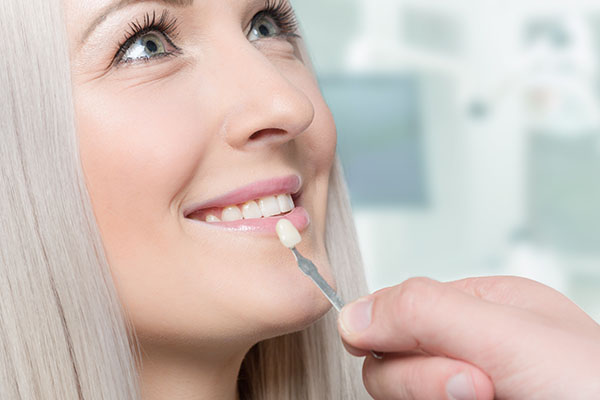
Veneers can improve a patient’s smile in many ways by covering up imperfections in teeth with natural-colored shells. Staining on front teeth is one of the most popular reasons patients choose this type of restoration. People who have lived with discolored teeth can feel uncomfortable smiling in public, and other treatment options may not be as easy or effective as bonding these shells to teeth. Here is how this treatment can change the color of your teeth and improve daily living.
How the treatment works
Getting veneers is a hassle-free process. Patients can easily schedule an appointment to get a brand-new look at any time, but there are some things to consider that may be worth discussing with a dentist first. Understanding how the process works and how the end result will change the color of teeth can prepare patients for what is to come.
Choosing the material
Two materials are used to create veneers, porcelain, and composite resin, and each has its own pros and cons. Porcelain is the more durable of the two and can last anywhere from 10 to 20 years after the initial application. The chance of it getting damaged is small, but it cannot be repaired if chipped and the entire shell will need to be replaced. Additionally, porcelain looks very similar to natural teeth and are stain resistant.
Composite, on the other hand, does not last as long, tapping out after around five years of use. Composite is easier to apply than porcelain and requires fewer appointments. If a composite shell cracks or chips, this can usually be repaired without replacing the entire unit. However, this material can stain over time.
Scheduling a visit
Once it is determined that a patient is a good candidate for the treatment, an appointment can be scheduled. It is important to note that patients receiving porcelain veneers need two separate visits; the first visit will be to measure teeth, take impressions, and match color, and the second is to place the restorations.
Changing teeth color
To start the appointment, a dentist measures and removes a small portion of the front of each tooth to prepare for the placement of the shells. If patients are receiving porcelain, the dentist will take a mold of the teeth and send it to a lab where the veneers are made. It can take up to two weeks for the new shells to arrive, during which time the patient will get temporary ones.
The dentist then makes sure the coloration of the restorations is correct and matches the patient’s natural teeth. Patients getting a full-mouth restoration may choose a brighter shade. Then the tooth surface is roughened and the porcelain or composite is bonded on. The dentist may do some sculpting to make sure the smile is even.
Conclusion
Caring for veneers is as easy as keeping up normal oral hygiene routines such as brushing and flossing. With such an easy solution for discolored teeth, there is no reason not to talk to a dentist about this restoration process.
Request an appointment or call New York Dental Office at 212-548-3261 for an appointment in our New York office.
Recent Posts
Dental veneers transform smiles, boosting patients' confidence by improving their aesthetics. These thin, custom-made shells cover imperfections, such as discoloration, chips, or gaps, and offer a durable solution for enhancing your appearance. However, following specific care routines and working closely with a dentist is vital to keeping veneers looking and functioning at their best. Taking…
Dental veneers have become an increasingly popular choice for patients looking to improve the appearance of their smiles. A veneer can enhance the color and shape of your teeth, providing a more uniform and aesthetically pleasing smile. However, they are not a one-size-fits-all solution; certain factors determine whether someone is a good candidate. Patients should…
Porcelain veneers and porcelain laminates are other names for dental veneers. These are tooth-colored, thin, custom-made casings dentists apply to the visible part of one’s teeth. The purpose of which is to make the teeth appear more appealing. These laminates are bonded to one’s teeth. And since they are connected, they also have better length, color,…