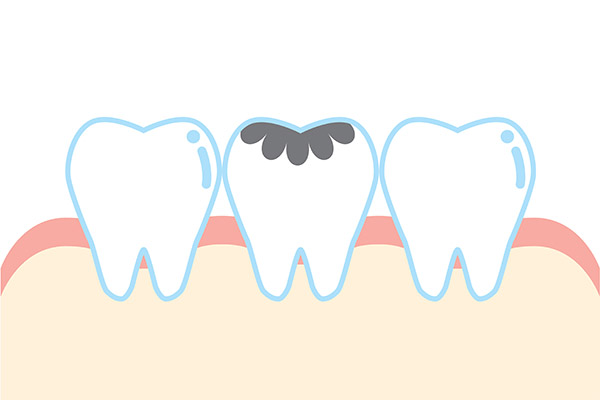
While most people visit a dental practice every six months, others only go on occasion or not at all. For those individuals, the thought of seeing a dentist causes a lot of anxiety. Hopefully, the information provided about how a dentist treats a cavity will answer questions and put them at ease. These people will discover that having a cavity filled is much easier than imagined.
What is a cavity?
For someone who does not have their teeth checked regularly, they need to understand what a cavity is. A dental practice explains that a cavity is a small hole that develops in a tooth. If not treated, this hole gets larger and deeper. It can even begin to affect other teeth and lead to secondary oral problems.
Why do cavities form?
If someone does not brush and floss regularly, food particles get trapped in between the teeth and gums. Eventually, this causes a buildup of plaque, which is a yellowish slimy substance comprised mainly of bacteria. Over time, this plaque bacteria produces acids that attack the tooth’s enamel. With the enamel compromised, which is a type of protective barrier, the acid causes holes or cavities to form.
The problem is that if an individual does not get a cavity filled quickly, it can lead to more serious issues. After all, once a cavity forms, the acid continues to cause destruction. That can lead to tooth decay of one or more teeth. With that, infection can set in, which can lead to gum disease and decrease bone density.
A dental practice first identifies the type of cavity
Even people who see a dentist regularly might not know there are three distinct types of cavities. The first is a root cavity, which usually develops in older individuals who have some kind of existing gum disorder. For this, a dental practice removes any tooth decay, followed by filling the cavity. Since this type of cavity is close to the gumline where little enamel exists, early treatment is essential.
A pit and fissure cavity is the second type. As explained by a dental practice, this cavity usually forms on the molars, which people use to chew. With pits and crevices, food particles become trapped easily. Children, as well as adults who do not brush regularly, are at the greatest risk. As for the treatment, a dentist would remove the tooth decay and fill the hole. In severe cases, an individual might need a root canal and a crown.
The third type of cavity occurs on a smooth surface. Of all cavities to form, this is the slowest and the least common. A smooth surface cavity involves any flat portion of a tooth. As a slow-growing cavity, a dental practice can treat this easily. That entails removing tooth decay and then filling the hole.
Taking proper care of your teeth
The main goal is to prevent a cavity from forming in the first place. You can do that by brushing and flossing after every meal, rinsing with a fluoride mouthwash, and visiting a dental practice every six months. However, if you suspect you have a cavity, do not wait to see a dentist. Otherwise, you could face more serious issues.
Recent Posts
Dental practices continue to serve as reliable sources of information for individuals seeking to maintain optimal oral health. However, myths often cloud the decision-making process related to daily care, recommended procedures, and overall dental well-being. New York Dental Office seeks to debunk the five most common dental myths to help people regain control over their…
Good oral health is important for more than just how your teeth look. Our dental practice emphasizes to each patient that healthy teeth and gums can contribute to overall health. Neglecting oral hygiene can lead to serious health problems that affect other parts of the body. Here are three key ways oral health can affect…
A dental practice is where you turn when something feels wrong with your teeth or gums. Knowing when to call a dentist can help prevent small problems from damaging your oral health. Many people wait too long to get help, which can lead to more pain and more complex treatments. Learning the signs that need…