Natural-Looking Dental Implant Crowns for Front Teeth
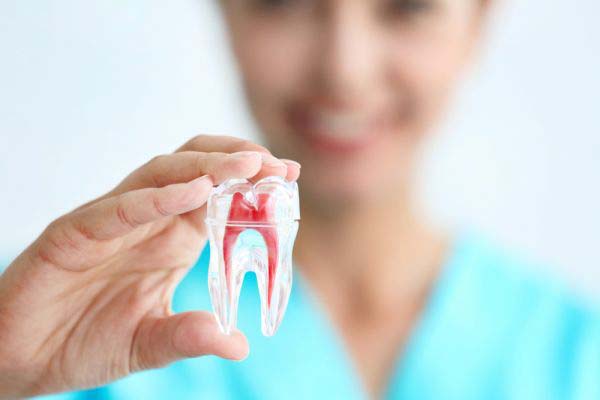
A dental implant crown can make a huge difference in your day-to-day existence. Just ask anyone that has had to go through life with a missing front tooth. It is the reason why dental crowns are such a popular tooth restoration option –– they can replace a lost tooth and blend in with the remaining natural teeth.
Dental crowns are commonly used to restore badly-damaged natural teeth. The variant that is used to replace missing teeth attaches to a dental implant instead of a natural tooth. As such, a dental implant crown will have a slightly different construction compared to the type of crown that sits on a natural tooth.
Front teeth, back teeth and dental implant crowns
A dental implant crown that is designed to replace a molar can afford to have some ‘imperfections’ that allow it to better attach to a dental implant. Not so with a crown for the front teeth. Most patients prefer their crowns to look perfect and natural, with no discolorations or visible holes. So, how does a patient choose a dental implant crown that they can be proud of? Here are a few guidelines.
Choosing a suitable crown for a front tooth
The first thing that people notice about an individual they have never met before is that person’s appearance. An ‘off’ smile makes just as big an impression as a dazzling one. Here are the rules to remember when choosing an implant-supported crown that will create an appealing set of teeth:
1. The material will determine the color of the crown
Metallic crowns stand out, especially when placed on a front tooth. That look has gone out of style now, so it is unlikely that a patient chooses a gold crown or a silver crown for their front teeth. Unless they are the sort of free spirit that likes to make a statement with their smile.
Even a porcelain crown that is fused with metal has a dark, metallic band of color at its base. The dark color at the gum line is actually the metallic part of the porcelain-and-metal crown. Most, patients will avoid this type of crown because the band of metal at its base still manages to catch the eye.
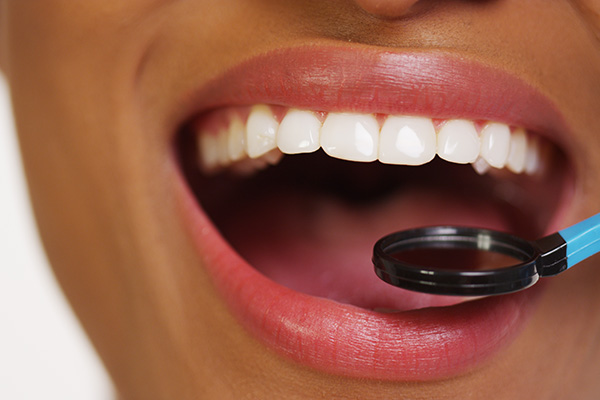
Patients often choose tooth-colored materials for their crowns. The most common of these is porcelain, which is popular because it is fairly tough. Porcelain is also smooth and translucent, just like the enamel of a natural tooth, making porcelain crowns the most popular choice for natural-looking implant-supported crowns.
2. How the crown attaches to the abutment affects how natural it looks
An implant-supported crown is fastened onto an abutment in one of two ways. The first way is with dental cement, which is tooth-colored. A cement-retained implant looks very natural, compared to the second option, a crown with multiple components.
The second type of crown attaches to an abutment with screws, which are noticeable. This option is usually used for the molars, and rarely for the front teeth.
An all-porcelain crown is the way to go if you want a natural-looking smile
Our dentist has lots of experience placing dental implants for cosmetic and functional reasons. Schedule an appointment with our New York clinic and start the process of making your smile complete.
Let's get started…
Request an appointment here: https://www.newyorkdentaloffice.com or call New York Dental Office at (212) 838-6226 for an appointment in our New York office.
Check out what others are saying about our services on Yelp: Read our Yelp reviews.
Recent Posts
Receding gums leads to gum tissues pulling back from teeth roots, making your teeth appear abnormally large. Teeth roots are protected from acids made by oral bacteria by the gum tissues that cover them, so gum recession leaves them vulnerable to these acids, increasing their risk of decay.Receding gums can be caused by several things,…
Receding gums is a condition that leads to gum tissues pulling back from teeth roots. It leaves these roots exposed to acids made by oral bacteria that cause decay. Unlike the crown of a tooth, which is protected by enamel, teeth roots have an outer layer called cementum that is not as durable as enamel.…
A TMJ Dentist specializes in diagnosing and treating disorders of the temporomandibular joint, which connects the jaw to the skull. TMJ disorders or TMJDs can lead to pain and difficulty with everyday activities such as chewing and speaking. Understanding the causes and symptoms of TMJDs can help individuals seek appropriate care.The temporomandibular joint (TMJ) plays…
Worried about receding gums? Read on to learn about how to prevent this condition. Receding gums can put the long-term health of teeth at risk. The good news is that mouthwash, along with other at-home oral care routines and regular cleaning and check-up visits with your dentist, can significantly reduce the risk of periodontal (gum)…