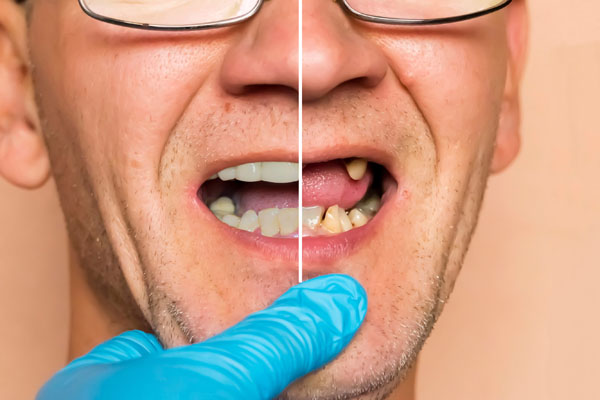
A dentist’s job is to make sure your teeth stay in great health. For many patients, this means considering the benefits of dental restorations. Dentists recommend restorative procedures when a patient has a damaged, diseased, or missing tooth. These standard treatments stop the problem in its tracks, prevent additional injury and infection, and even provide cosmetic benefits.
What are dental restorations?
Dental restoration involves supplementing existing teeth with synthetic materials. Traditionally, dentists have used metals and composite resin, but ceramic and porcelain parts are increasingly common due to their more natural appearance. Restorative work provides teeth with the necessary repairs, protection, and structural integrity to maintain optimal health.
Common restorative dentistry practices include:
- Fillings
- Crowns
- Bridges
- Dentures
- Implants
- Veneers
When would a dentist recommend dental restorations?
Dentists recommend dental restorations when a tooth or gum concern diminishes your oral health, the functionality of your teeth, or even your self-esteem. The most effective restorative procedure depends on the condition of your teeth and the problem you need to treat.
When you have a cavity
Cavities, or tiny holes, form when a patient fails to maintain good oral hygiene. Because cavities are so common, dentists often find themselves recommending dental fillings to combat them.
When a cavity wears down a tooth, a common way to prevent further damage is to fill the damaged area with synthetic materials. Fillings block harmful bacteria from exacerbating the cavity and restore the tooth’s healthy appearance and functionality. Dentists often recommend fillings as a preventative measure rather than a reactive one.
When you have a cracked, chipped, or missing tooth
If you have an externally-damaged tooth, the impact is more than just aesthetic. Even slight changes to a tooth’s structure degrade its integrity, putting the tooth at risk for injury or infection.
Crowns provide an ideal solution for restoring cracked, chipped, or missing teeth to their original condition. Built to resemble the shape and consistency of natural teeth, a crown sits on top of a damaged tooth to give the illusion that the tooth is still intact. Bridges, which consist of multiple crowns strung together, are ideal for filling the gap caused by a missing tooth, as open wounds invite bacteria and infection.
When you struggle with confidence
Sometimes, a dentist’s reason for recommending restorative dentistry has less to do with the patient’s physical health. If a patient has noticeable gum or teeth concerns that detract from their self-esteem, a dentist might recommend restorative work.
Although restorations are not intended to be cosmetic fixes, most dental repairs do improve a patient’s smile and confidence. Since ceramic and porcelain materials contribute to a more realistic appearance, dentists may suggest veneers to patients wanting a professional, polished touch.
Conclusion
Dentists recommend dental restorations when a patient presents with damaged, diseased, or missing teeth. Without protection, impaired teeth continue to deteriorate and can eventually lead to dental decay, tooth death, or systematic infection. These restorative practices primarily aim to improve a patient’s oral health, but patients looking for cosmetic enhancements benefit from the resulting fuller, healthier smile.
Request an appointment or call New York Dental Office at 212-548-3261 for an appointment in our New York office.
Recent Posts
A dental inlay is one of several restorative options available to repair damaged teeth and preserve oral health. When decay, fractures, or wear compromise the strength or structure of a tooth, dentists consider the severity and location of the damage to determine the most appropriate treatment. Understanding the differences between a dental inlay, onlay, filling,…
Dental restoration services, formally known as restorative dentistry, are paramount to a person’s overall oral health. Dental restoration is the process of repairing teeth and restoring them to their original state, hence the name. This article will explore how restorative dentistry can prevent health problems, from tooth decay to misalignment and more.Decay, infection, and other…
Your dentist can provide a dental restoration that can restore your damaged tooth. A broken tooth can cause pain and discomfort. It can prevent you from eating, smiling, and speaking. Knowing what restorations are available can help you decide which one suits you the most. Here are the details about each dental restoration that can…