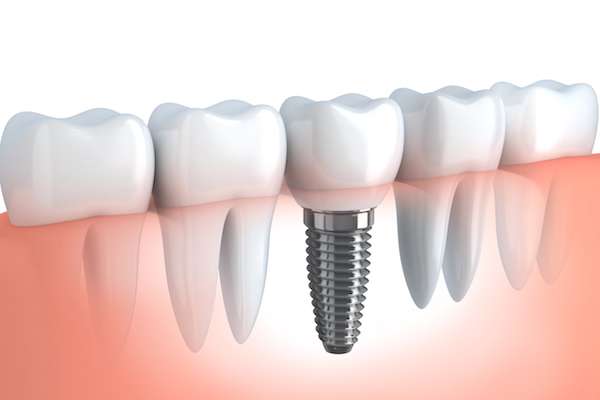
Patients may feel overwhelmed when a dentist suggests dental implants. The process can sound intimidating, but fortunately the practice of providing patients with a brand-new smile has been studied, modernized, and improved over the past several decades. Not only can patients feel confident smiling frequently in public again, but their oral health and daily function may be vastly enhanced with implants.
Why get dental implants
Replacing teeth is the number one reason for getting implants. Such a replacement offers a number of underlying positive effects:
- Improved oral health by being able to chew properly and expand on a previously limited diet
- A fully restored, whole smile
- Boosted self-confidence in smiling and speaking
- Durability that usually outlasts that of other appliances, such as dentures and dental bridges
What to expect from the procedure
Dental procedures are slightly different for every individual. However, these six steps represent the standard for receiving dental implants:
Step 1: Assessments
All patients must go through a list of assessments to make sure they are healthy enough to be a candidate for surgery. The jawbone must be strong, healthy, and able to heal after surgery. The patient cannot have medical history that may compromise the procedure or potentially cause complications afterward. In some cases, additional steps of removing damaged teeth or bone grafting must be included in a patient’s treatment plan.
Step 2: Initial surgery and post placement
The surgery for placing the implant post is fairly simple. The gum is cut open to expose the jawbone, and small holes are drilled where the posts are then placed. The post is usually secured deep in the bone to encourage bone growth and bonding and to ensure proper support for the future tooth.
Step 3: Healing
After surgery, the patient must allow time for the jawbone and gums to heal completely. During this time the bone will heal around the post and create new, functional support (a process called osseointegration). Once the healing process is complete, the abutment can be placed on the implant post.
Step 4: The abutment
Another minor surgery may be necessary to reopen the gums to expose the post. The small abutment is connected to the post. Surrounding gum tissue is carefully closed again, this time around the abutment. If the gum tissue grows over the piece, the artificial tooth cannot be placed.
Step 5: Placing new teeth
Finally, a tooth impression is taken to create the crown. More healing time may be necessary if a patient’s jawbone is not yet strong enough to endure pressure on the new tooth. Once it is ready, the tooth is secured to the abutment.
Step 6: Aftercare
Patients may need to avoid hard foods following the procedure. Some may experience side effects like swelling in the face, gum bruising, and pain where the implants were placed. Medications may be prescribed until the pain subsides.
Conclusion
A dentist can provide all details about dental implants and the procedures involved. Each patient has a different care plan, so discussing individual needs is the easiest way to see what this process will look like for you.
Request an appointment or call New York Dental Office at 212-548-3261 for an appointment in our New York office.
Recent Posts
Dental implants are a permanent, functional solution for patients with tooth loss in one or both dental arches. Both partial and full arch dental implants have become more accessible, customizable, and successful for a wide range of patients. However, they have different uses and candidacy requirements. Understanding the differences between these options helps clarify which…
Many people resort to using dentures instead of dental implants in managing tooth loss. Dentures may restore the look of the lost tooth or teeth, but they do not compare to implants. Many dentists may recommend shifting to implants. The goals are to increase comfort and improve function. If you want to know how to…
Dental implants are one of the most common ways to replace missing teeth in general dentistry nowadays. These are screws or rods (typically made out of titanium) that can serve as artificial teeth roots. Oral restorations like crowns are fitted to implants to replace missing teeth. Implants are constructed to last a lifetime, but the…